Rubber Plant



About Our Rubber Plant

Rubber Plant Bio
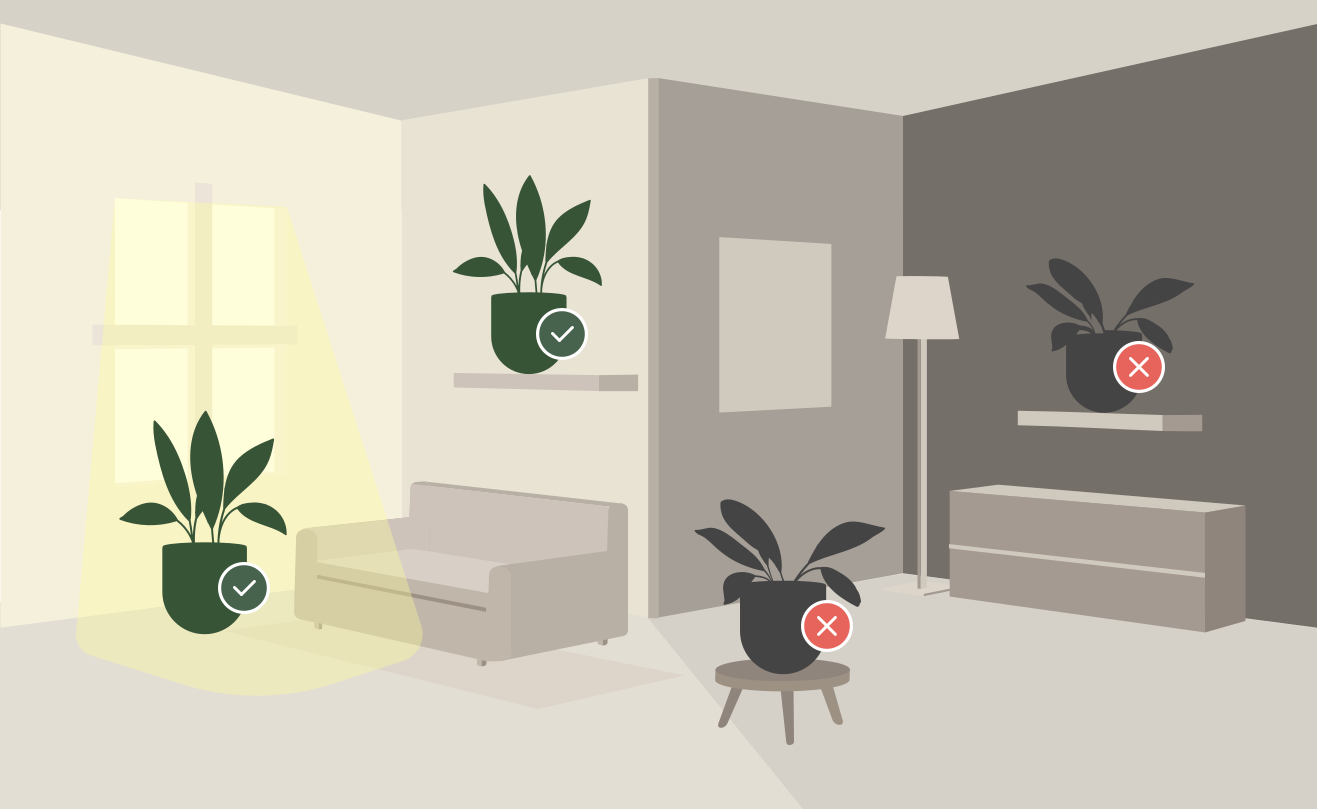
Light Instructions
The Rubber Plant thrives in bright, direct light where sunlight streams in, but it can also adapt to bright, indirect light where the sun’s rays are diffused. Avoid placing it in low-light areas or spaces without natural light.
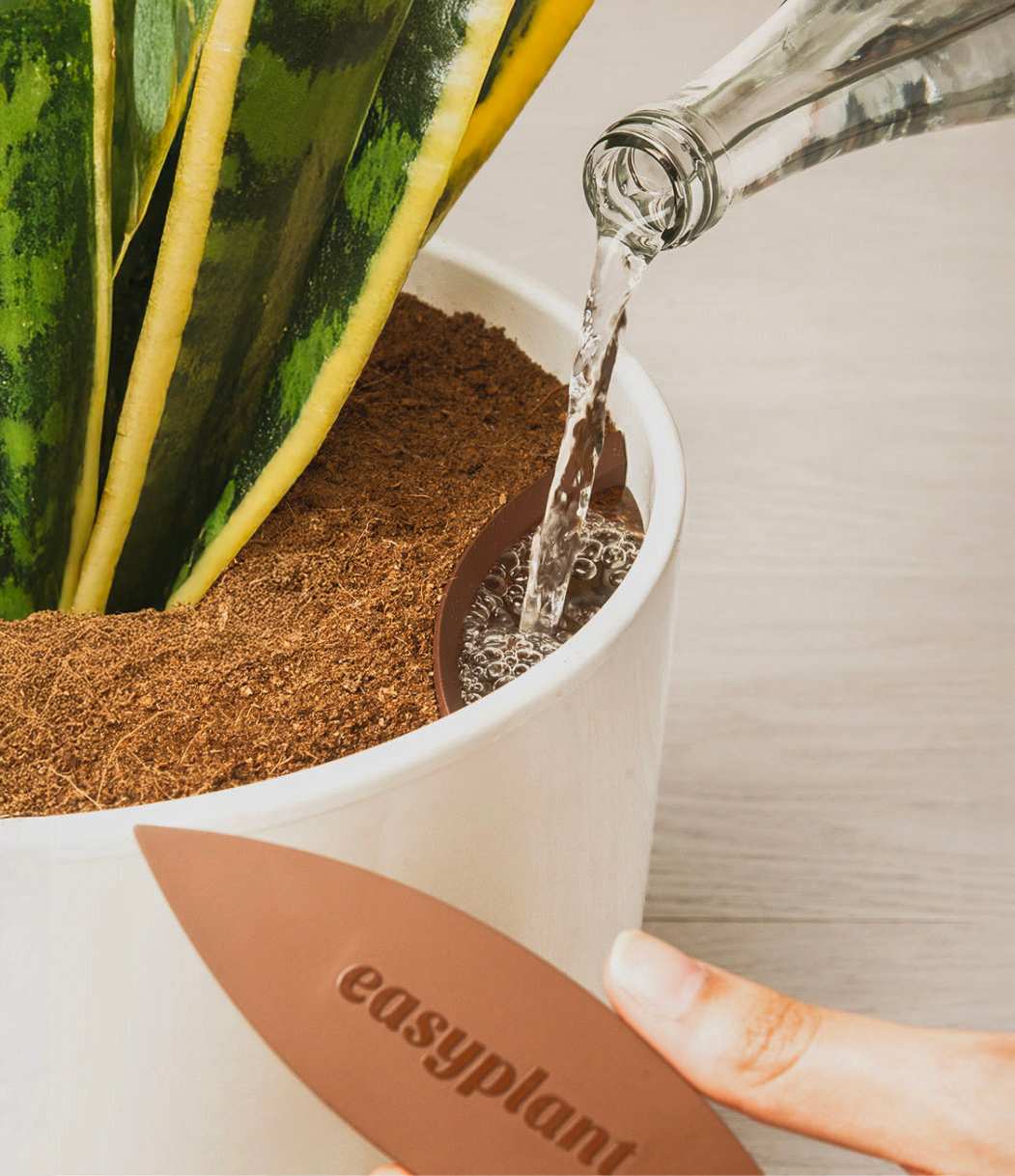
How does self-watering work?
- 1Open the lid and fill with water
- 2Your plant drinks only when needed
- 3The result: healthy, long-lived plants that are easy to care for
easyplant benefits
- Carefree and convenient
- No more worrying about when to water
- Healthier plants that live longer
- We use proven irrigation technology to optimise water consumption
| Advantages |  | Other |
|---|---|---|
| Water interval | 1 Month | 1 Week |
| Overwatering | Rare | Common |
| Underwatering | Never | Common |
| Over compacted dry soil | Never | Common |
| Easily know when to water |  |  |
| Stable root growth | | |
During its first few days at home, your Rubber Plant will be extra sensitive and may shed a few leaves. You can let them fall naturally or trim them – no need to worry, as new leaves will soon take their place. To help it adjust, avoid moving the pot too often and allow it to settle in one spot. To promote healthy growth, dust the leaves occasionally and rotate the pot a quarter turn once a month. If you want to control its shape and height, prune it as needed.
Yes, Rubber plants produce low-grade rubber. Natural rubber comes from latex, which is found in the sap of the Rubber plant. The latex is extracted through a process called rubber tapping.
Rubber plants are classified as Class 4 on the toxicity scale, meaning they are mildly toxic. However, they should never be ingested, so it’s best to keep them out of reach of children and pets. If the sap comes into contact with the skin, wash it off immediately. Those with a known latex allergy should take extra care.
 small
small medium
 large
large huge
huge bundles