Philodendron Brasil



About Our Philodendron Brasil

Philodendron Brasil Bio
Philodendron Brasil (Scadens Brasil) is easy to care for and even easier to love – its name comes from the Greek words Philo (meaning 'love') and dendron (meaning 'tree'). Native to Central America and the Caribbean, Philodendron Brasil features lime-green variegation on its heart-shaped leaves. This trailing plant adds a touch of the tropics and brightens up any living space.
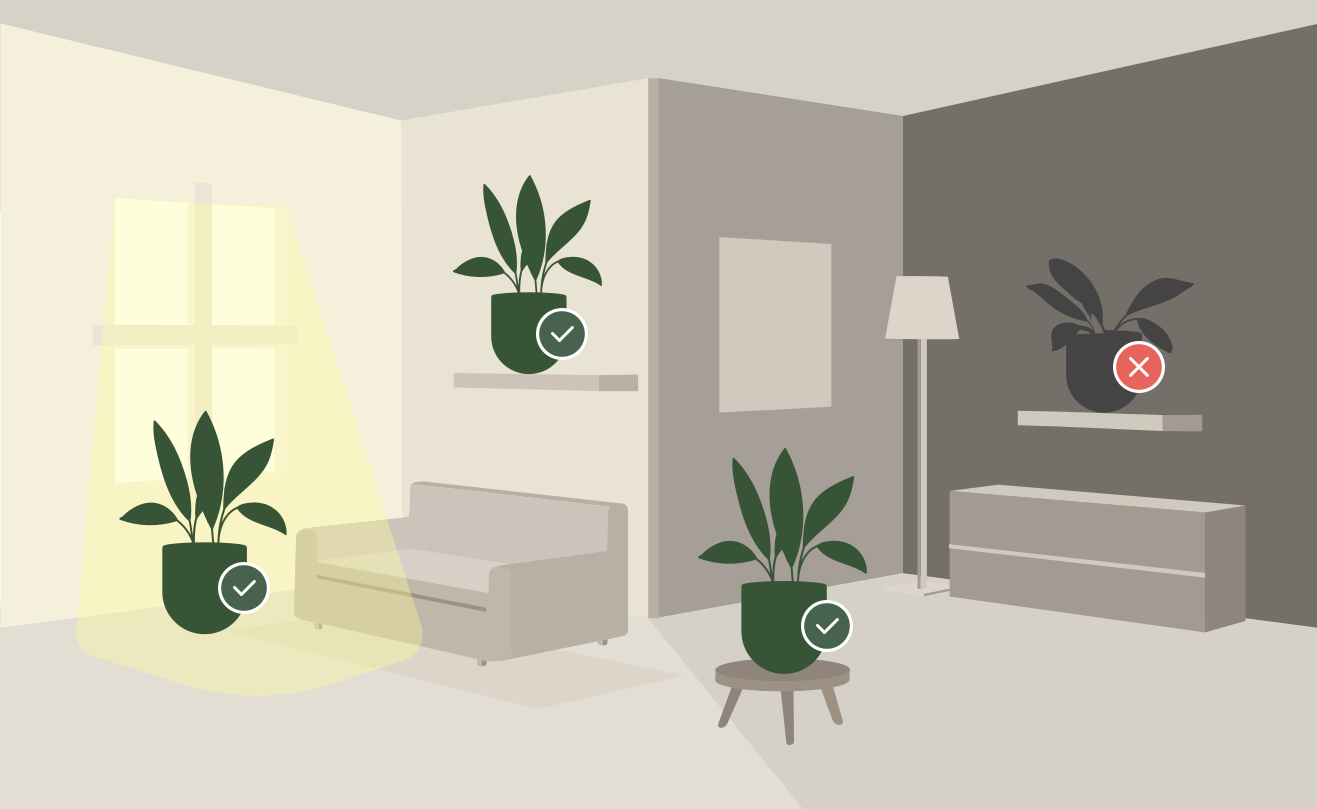
Light Instructions
Philodendron Brasil thrives in bright, indirect light but can also adapt to medium or low light. Avoid direct sunlight, as it may scorch the leaves, and keep it out of areas with no natural light.
How does self-watering work?
- 1Open the lid and fill with water
- 2Your plant drinks only when needed
- 3The result: healthy, long-lived plants that are easy to care for

easyplant benefits
- Carefree and convenient
- No more worrying about when to water
- Healthier plants that live longer
- We use proven irrigation technology to optimise water consumption
| Advantages |  | Other |
|---|---|---|
| Water interval | 1 Month | 1 Week |
| Overwatering | Rare | Common |
| Underwatering | Never | Common |
| Over compacted dry soil | Never | Common |
| Easily know when to water |  |  |
| Stable root growth | | |
When you first bring your Philodendron Brasil home, you may notice a few yellowing or dropping leaves – this is normal as the plant adjusts to its new environment. Once settled, it becomes very low-maintenance and can recover quickly from minor issues. To keep your plant growing evenly, gently dust the leaves and rotate the pot by a quarter-turn once a month.
Does Philodendron Brasil need sunlight?
Philodendron Brasil thrives in bright, indirect light but can adapt to low-light conditions as well as bright morning light. Avoid direct sun, which may burn the leaves, and make sure it’s placed in a spot with some natural light.
Is Philodendron Brasil the same as Pothos?
No, Philodendron Brasil and Pothos are different plants, although they both belong to the Araceae family and look similar. While Pothos leaves unfurl from the existing leaf, Philodendron Brasil leaves extend on a vine through a structure called a cataphyll. Their light and water needs also differ, so it's best to understand each plant's individual care requirements.
 small
small medium
 large
large huge
huge bundles