How to Care for Lace Aloe
Shop this plant
About Lace Aloe
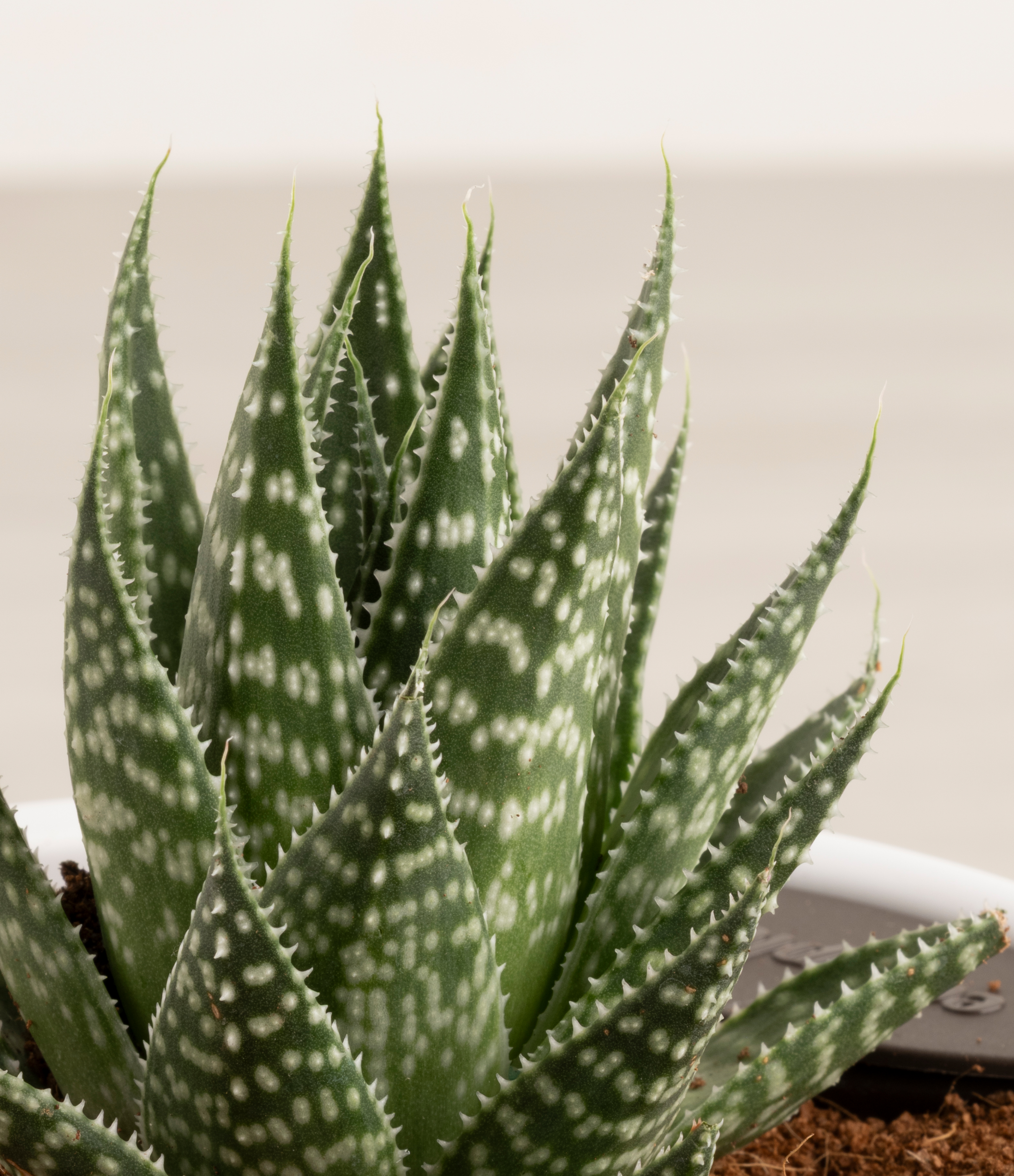
Lace Aloe, also known as Aloe aristata, is a compact and eye-catching succulent native to South Africa. It is admired for its dark green, triangular leaves adorned with delicate white spots and soft, lace-like edges that give the plant its name. Forming tight rosettes, Lace Aloe brings a sculptural elegance to any space and remains easy to care for. With the right conditions, it may also produce tall flower stalks with bright orange-red blooms, offering a bold contrast against its intricate foliage.
Other common names
- Guinea-Fowl Aloe
- Bearded Aloe
- Hardy Aloe
- Aristaloe aristata
- Aloe aristata
How Often Should I Water My Lace Aloe?
With easyplant, watering your Lace Aloe is simple. Make sure to check the easyplant reservoir once every 3 months and refill it if empty, and you’re all set!


Lace Aloe Light Needs
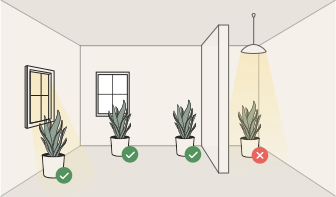
Lace Aloe grows best in a space with bright indirect light, where the sun rays are diffused, and can also adapt to both direct sunlight and low light. Avoid placing it in spaces without natural sunlight.
Lace Aloe thrives when placed near a south- or west-facing window where it can enjoy strong light for several hours a day. An east-facing window works well, offering gentle morning sunlight. To protect it from very harsh direct rays in summer, keep the plant a few feet back from the glass or filter the light with a sheer curtain to protect its leaves.

Lace Aloe Plant Care
To keep Lace Aloe looking vibrant, gently dust its leaves with a soft, dry cloth every few weeks to remove dust and help it absorb light more effectively. Rotate the plant about once a month so it grows evenly on all sides, as it will naturally lean toward its light source. Pruning is rarely required, but you can carefully remove dried or damaged leaves at the base to maintain a tidy appearance. If your Lace Aloe eventually outgrows its pot, repotting may be needed; easyplant offers a repotting kit with a larger pot designed for this purpose, and it should only be used once the plant has clearly filled its existing container. Repotting is a natural part of the plant’s life cycle and provides fresh soil and more space for continued healthy growth.
How Big Will My Lace Aloe Grow?
Indoors, Lace Aloe typically reaches about 15 to 30 cm tall and can spread up to 30 cm wide. Over time, it may produce offsets, or “pups,” at its base that create a fuller cluster and expand the plant’s overall display. Its compact size and slow to moderate growth rate make it an excellent choice for desks, shelves, or windowsills where a sculptural, low-maintenance plant is desired.
Temperature & Humidity
Lace Aloe thrives in typical indoor temperatures ranging from 18°C to 32°C. It can tolerate slightly cooler nights but should always be kept above 10°C to avoid stress or damage. Keep it away from cold draughts near windows as well as direct air from heaters or air conditioning vents, which can dry out the leaves. Normal household humidity is perfectly suitable, and no extra humidity is needed for this succulent to grow and stay healthy.
Is Lace Aloe Toxic for Pets & Kids?
Yes, Lace Aloe is considered mildly toxic if ingested by pets or children. Chewing on the leaves may cause nausea, vomiting, or digestive discomfort. To ensure safety, it’s best to keep this plant out of reach of curious pets and young children.
Troubleshooting Common Problems with Lace Aloe
If the leaves of Lace Aloe become yellow or mushy, it’s usually due to overwatering. With easyplant, this can be avoided by simply checking and refilling the reservoir once every three months; only when it’s completely empty. If you’re not using easyplant, allow the soil to dry out fully before watering again to prevent root rot. It’s normal for older leaves near the base to dry and shrivel over time – this is a natural part of the plant’s growth cycle. Brown or crispy leaf tips may appear if the plant is receiving too much direct sun or being placed near heaters or vents. Moving it to a spot with gentler light or more stable conditions usually resolves this. On rare occasions, pests like mealybugs may show up; if so, gently wipe the affected areas with a cotton swab or soft cloth to remove them.
Frequently Asked Questions about Lace Aloe Plant
- How often should I refill the self-watering planter for my succulent?

Only once every 3 months! Our self-watering system ensures your plant gets the exact amount of water it needs.
- Why don't easyplant pots have drainage holes?
Our innovative self-watering design maintains optimal soil moisture without drainage holes, ensuring healthy roots and a clean, mess-free experience.
- What makes easyplant succulents different from regular succulents?
easyplant succulents are specially chosen for indoor success, come pre-potted in optimal soil, and utilise our self-watering technology to prevent common issues like overwatering and root rot.
- Does Lace Aloe flower indoors?
Lace Aloe can occasionally produce a tall bloom stalk indoors, though flowering depends on receiving enough light and seasonal conditions.
- Why are my Lace Aloe leaves turning mushy and yellow?
This usually indicates overwatering or poor drainage. Allow the soil to dry out completely before watering again.
- Can Lace Aloe grow in low light?
Yes, Lace Aloe can tolerate low light, though it will grow more slowly and may stretch toward the nearest light source.

